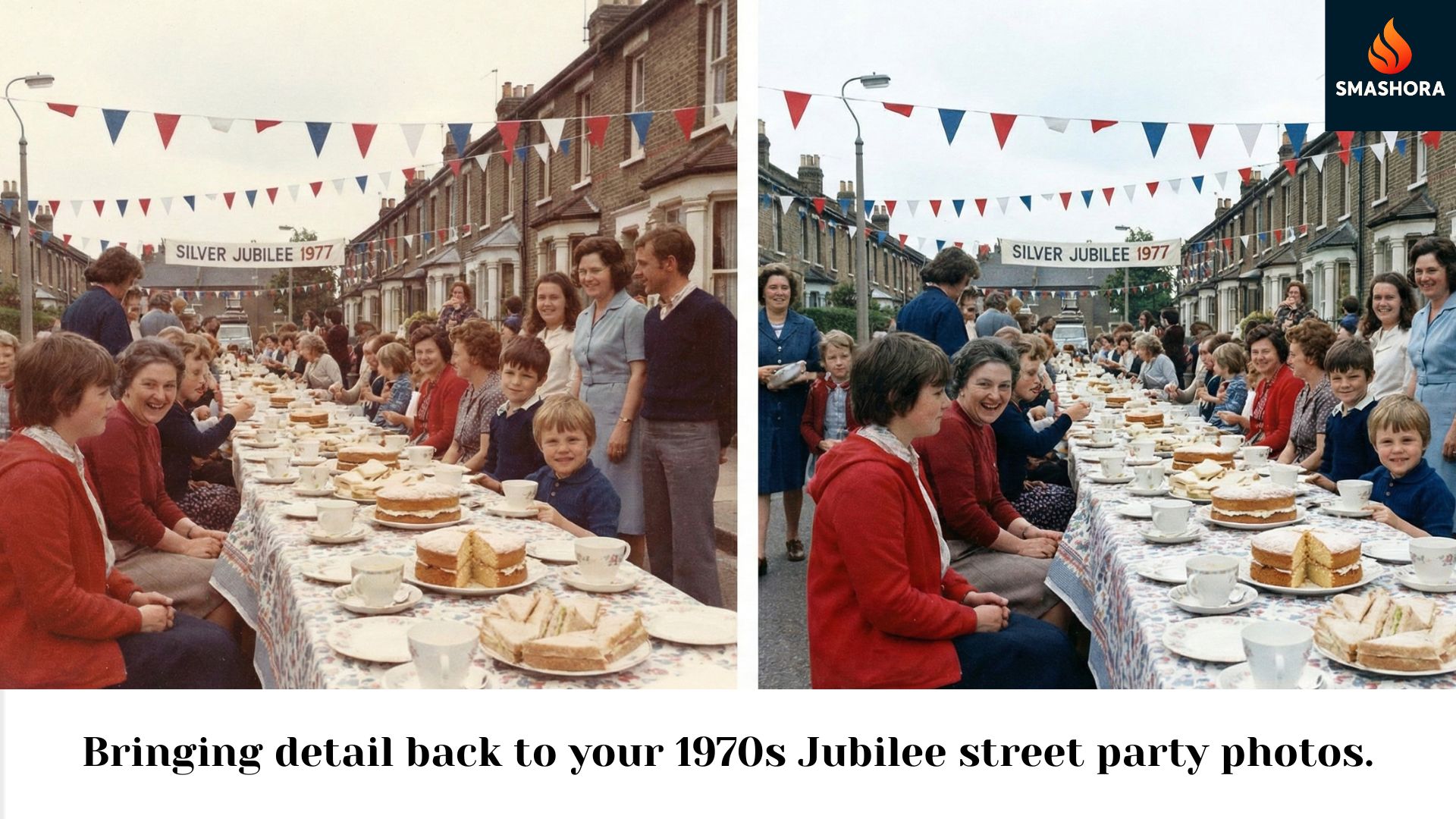
Silver Jubilee photos: If you grew up in the UK, there is a good chance you remember street parties. Long tables pulled together. Paper plates are bending under slices of cake. Red, white, and blue bunting strung from lampposts to front doors. During the Silver Jubilee and other national celebrations, entire streets became temporary living rooms.
Many families still have photographs from these days. They are often tucked inside old albums or biscuit tins. The images are busy and joyful, but also grainy, faded, and hard to read. Faces are small. Details blur together. Restoring these photos is not just about clarity. It is about reconnecting with a shared moment of community that feels rare today.
Contents
- 1 Why Silver Jubilee photos feel so special
- 2 The challenge of street party photography
- 3 How professionals sharpen blurry faces gently
- 4 Restoring colour and tone in 1970s photo restoration
- 5 Preserving the sense of movement and noise
- 6 Turning restored street party photos into keepsakes
- 7 Why these images matter now
- 8 Keeping shared memories visible
Why Silver Jubilee photos feel so special
Silver Jubilee photos capture more than an event. They record a feeling of togetherness. Children sitting on the kerb. Neighbours who barely spoke during the week share tea and stories. These images reflect a time when the street itself felt like an extension of home.
From a restoration perspective, these photos are often challenging. Many were taken quickly, on inexpensive cameras, in unpredictable light. Exposure varies from one side of the image to the other. Despite this, families treasure them because they show people as they were, relaxed and present.
The challenge of street party photography
Street party photography was never about composition. The photographer stood wherever there was space. People moved constantly. Children ran in and out of the frame. This creates images that feel alive but are visually crowded.
Over time, grain and blur increase. The background competes with the people. Faces become harder to recognise, especially those further from the camera. Restoring these images requires careful separation of subjects from surroundings without losing the natural chaos that makes them meaningful.
How professionals sharpen blurry faces gently
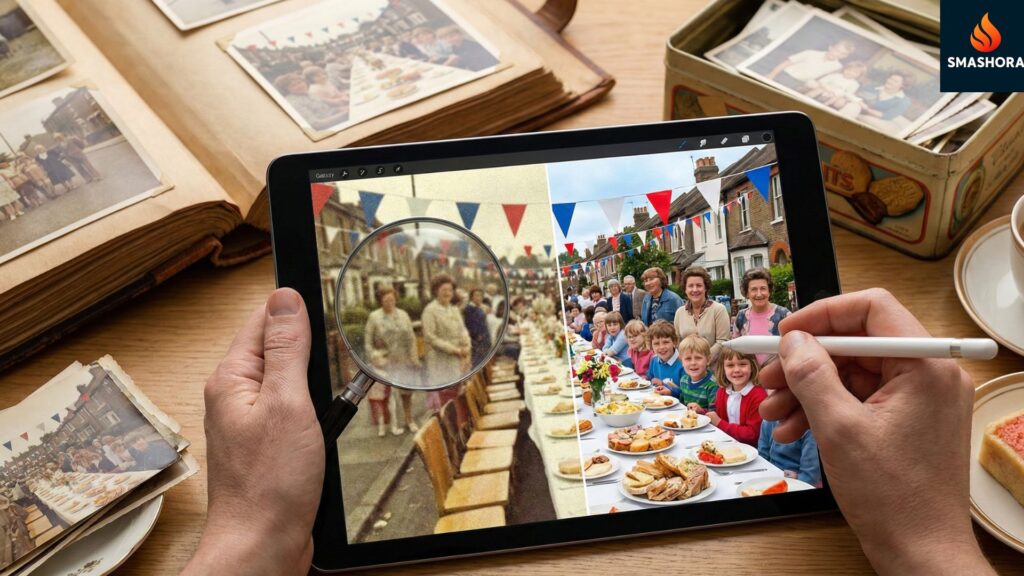
One of the most requested techniques for these images is the ability to sharpen blurry faces. In street party photos, faces are often small and slightly out of focus. Over-sharpening can make them look unnatural, so restraint matters.
Professional restoration uses selective sharpening. Faces are enhanced individually, not across the entire image. This brings back eyes, expressions, and familiar features while leaving bunting, tables, and background textures softer. The result feels closer to memory rather than digitally altered.
Check Out Our Other Article: Click Here
Restoring colour and tone in 1970s photo restoration
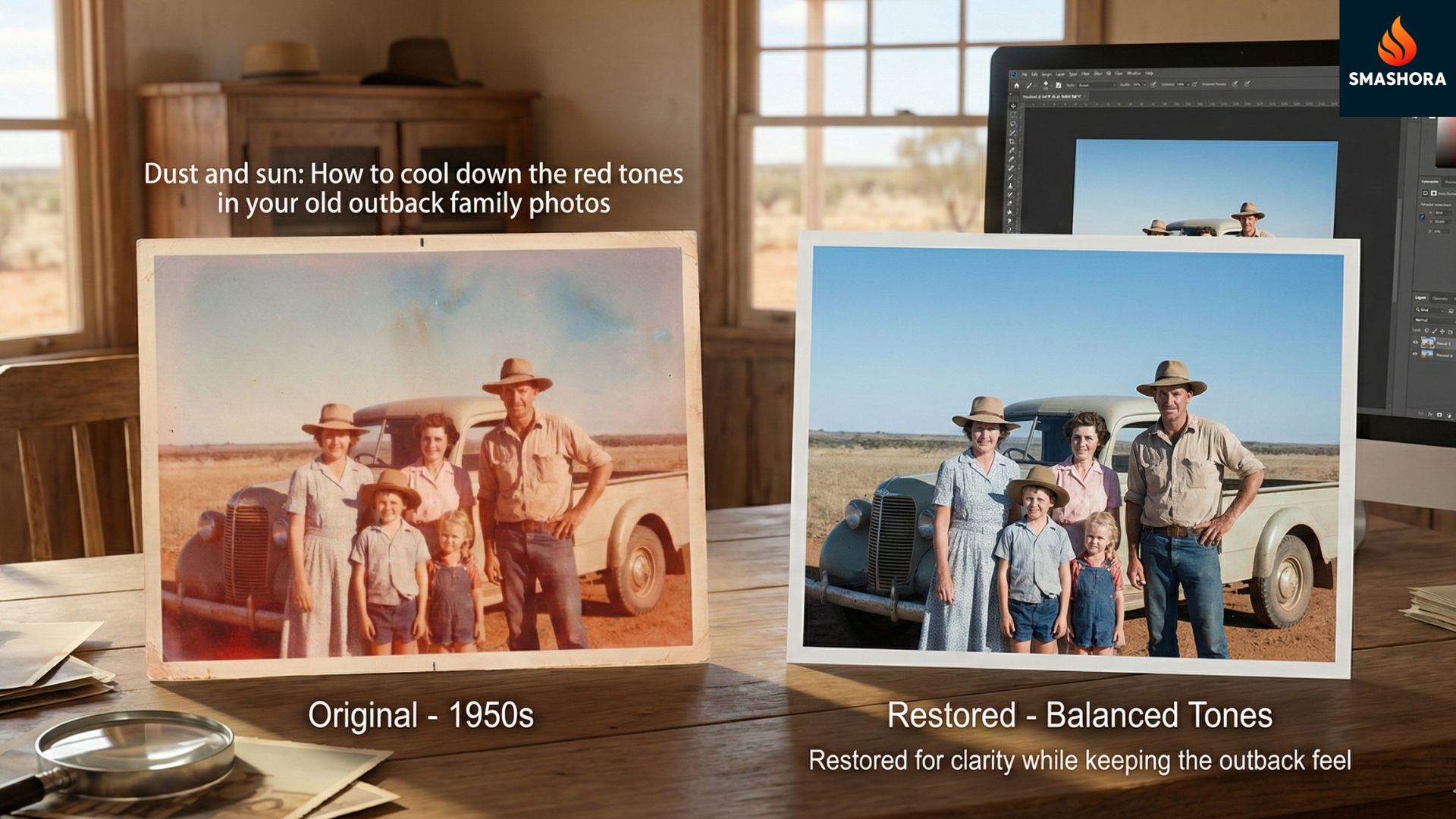
1970s photo restoration often involves correcting colour shifts. Many images from this era lean towards yellow or red tones. Whites lose brightness. Blues fade unevenly.
Restoration focuses on balancing these tones gently. Skin tones are adjusted first, then surrounding colours are brought back in harmony. Bunting regains its contrast. Clothing becomes easier to distinguish. The photograph remains true to its time while feeling easier to look at and understand.
Preserving the sense of movement and noise
Street party photos are noisy in the best way. Plates clatter. People talk over one another. Children laugh. A good restoration does not erase this feeling. It respects the movement and the mess.
Instead of smoothing everything, professionals preserve grain where it adds atmosphere. They remove only the distractions that hide faces or important details. The goal is clarity without stillness. The image should still feel like a busy afternoon, not a posed group portrait.
Turning restored street party photos into keepsakes
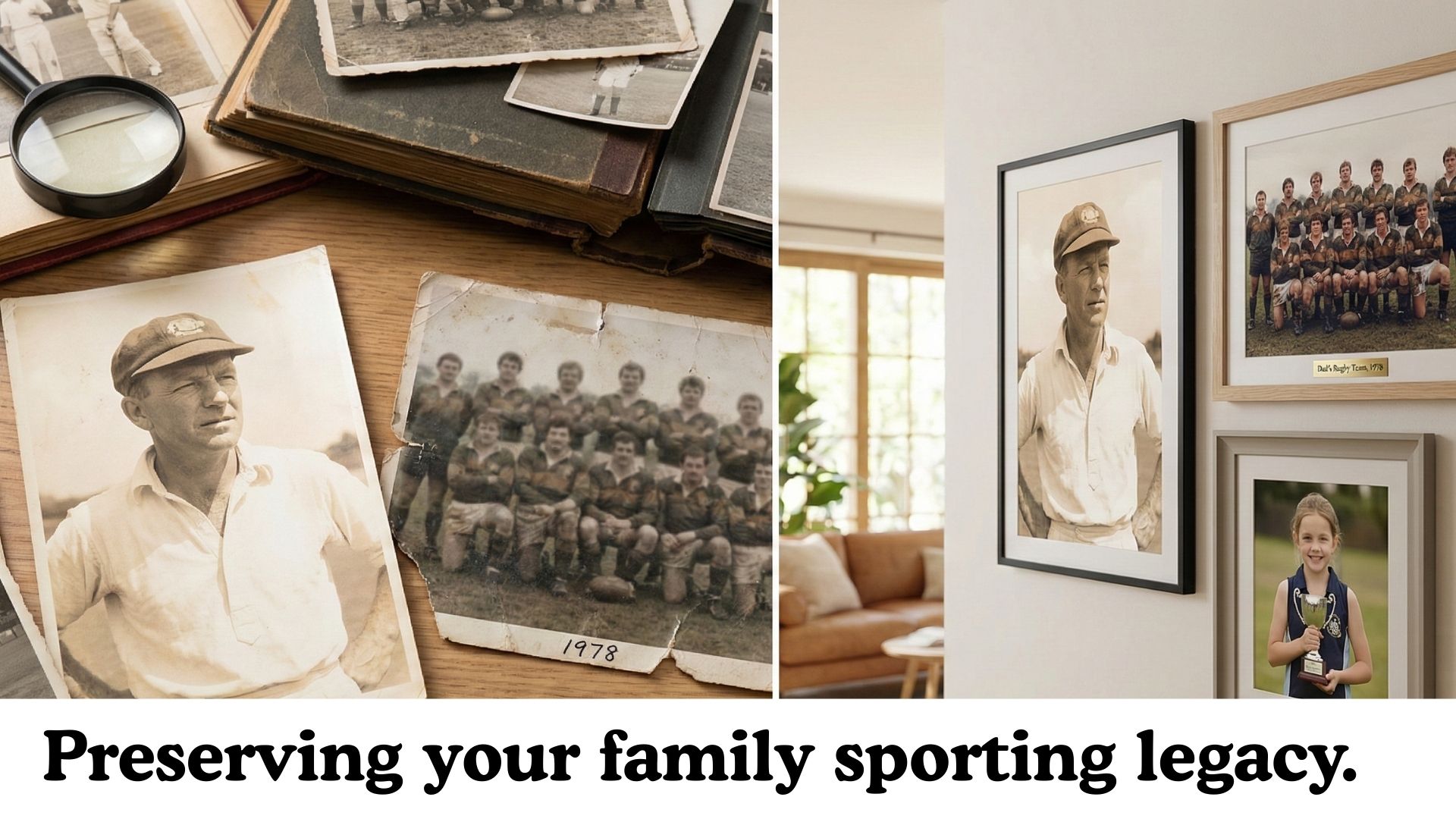
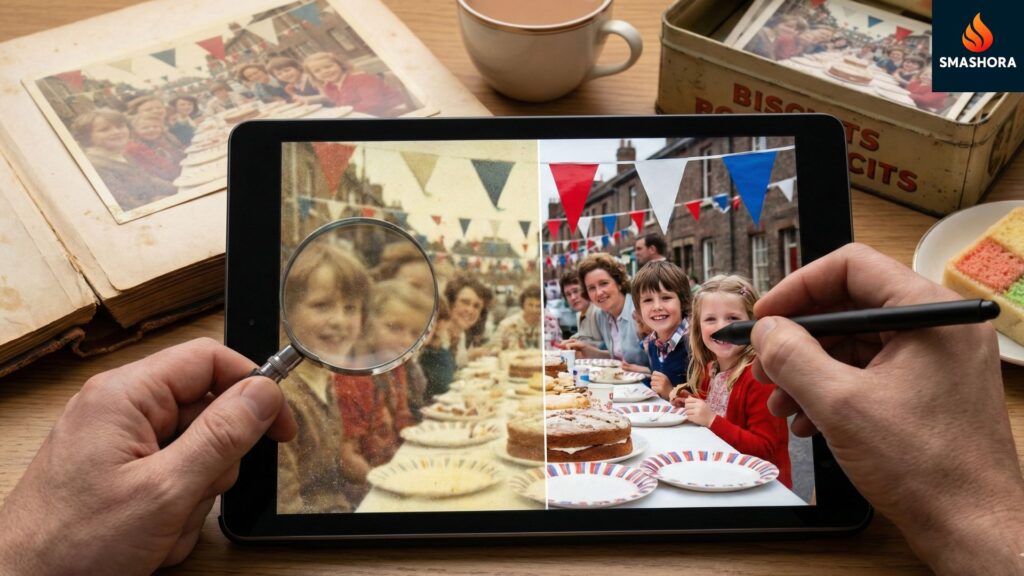
Once restored, these photos often take on new life. Some families frame a single image. Others create small photo books to share with siblings and cousins. In homes that favour simple interiors, one restored street party photo can add warmth without overwhelming the space.
A small caption noting the year and event, such as a Silver Jubilee street party, grounds the image in history. It becomes something visitors pause to look at, often sparking stories that have not been told in years.
Why these images matter now
Community life has changed. Streets feel quieter. Neighbours often know less about one another. These photographs remind us of a time when celebration spilt outdoors.
Restoring them is not about longing for the past. It is about understanding it. When children today see these images, they see family members as children too. They see streets that once belonged to everyone. That connection matters.
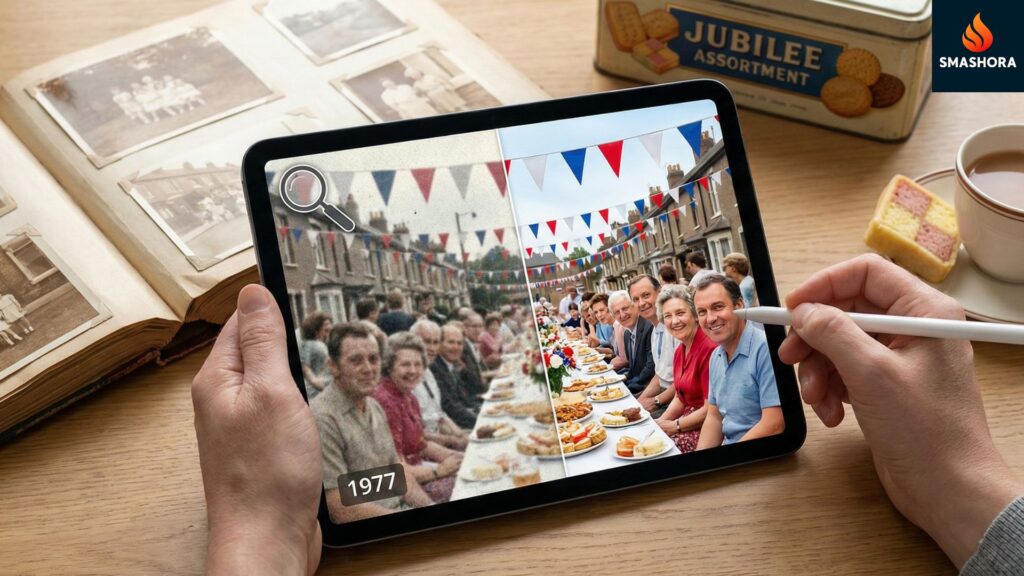
Tea, cake, and bunting may have faded from daily life, but they remain alive in photographs. With thoughtful restoration, these images can continue to be part of family stories rather than forgotten prints.
Bringing detail back to your Jubilee street party photos keeps a small piece of shared history visible. It allows memory to sit comfortably alongside modern life, reminding us that even the busiest, blurriest moments are worth preserving.