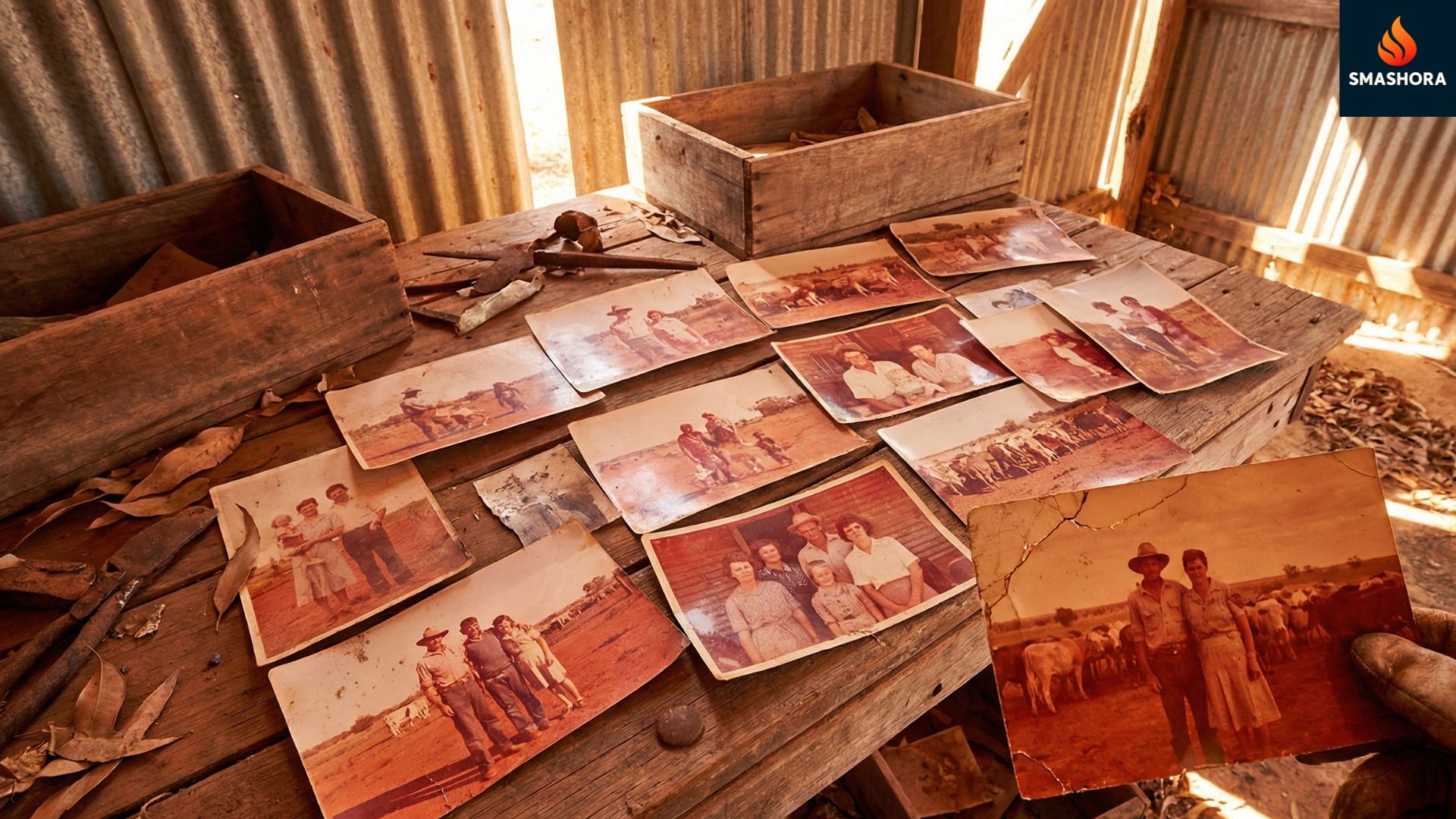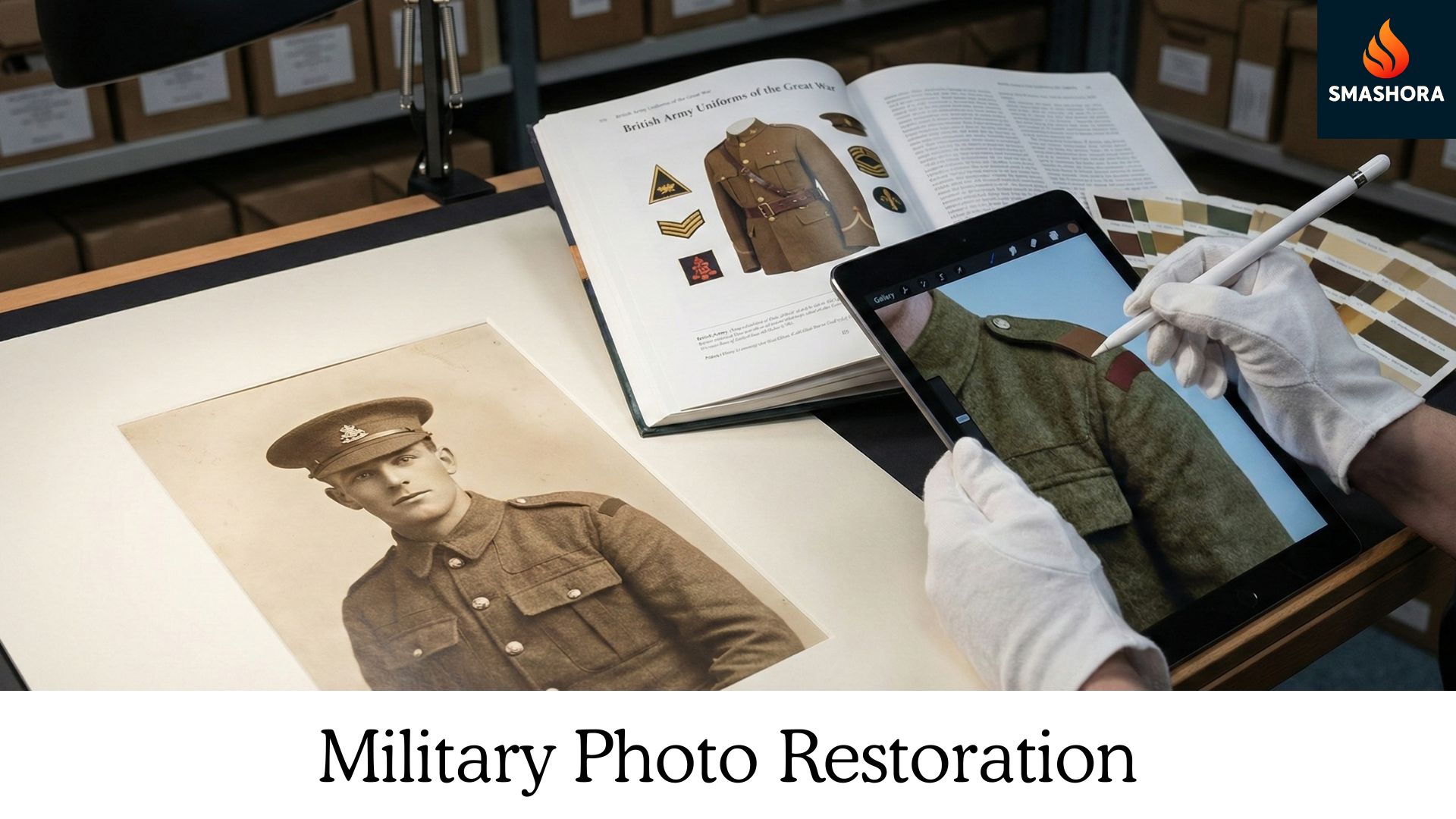
Military Photo Restoration: Every year, around ANZAC Day in Australia and Remembrance Sunday in the UK, families return to the same photographs. A young man in uniform. A formal pose. A serious expression shaped by uncertainty and duty. These images are often the clearest visual link we have to relatives who served, and they carry a weight that goes beyond memory.
Restoring these photographs is not a creative exercise. It is an act of care. When working with images of military service, accuracy matters deeply. The uniform is not a decoration. It represents identity, rank, regiment, and history. Getting the details right is a form of respect.
Contents
- 1 Why military photo restoration requires restraint
- 2 The importance of colour accuracy in uniform restoration
- 3 ANZAC photo restoration and historical responsibility
- 4 Understanding WW1 photo repair challenges
- 5 Why AI tools struggle with military details
- 6 Presenting restored service photos in the home
- 7 Restoration as an act of remembrance
- 8 Keeping service history clear for the future
Why military photo restoration requires restraint
Military photo restoration begins with understanding what should not be changed. Many service photographs were taken quickly, often before deployment. Lighting was basic. Film quality varied. Damage over time is common.
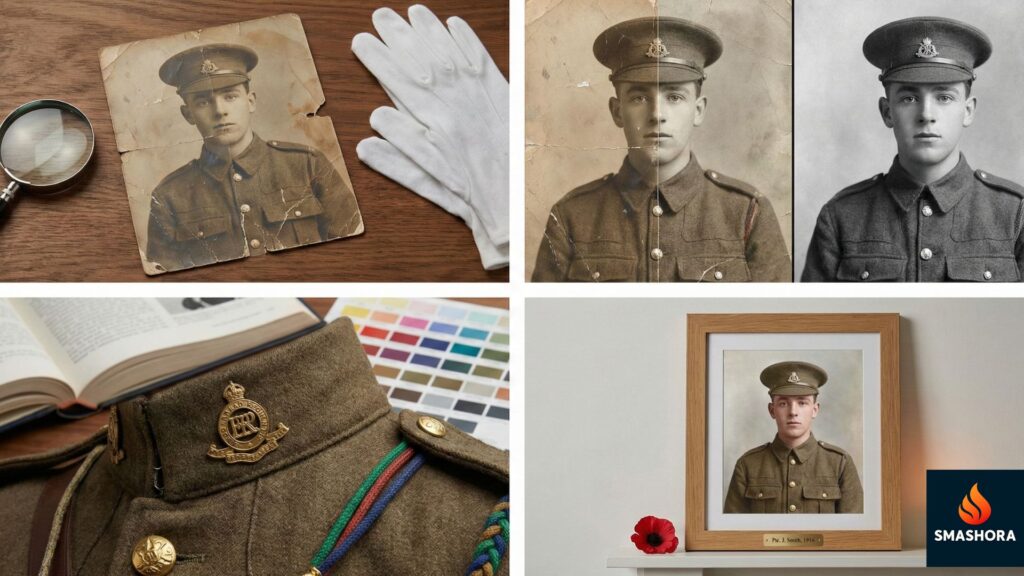
The aim is not to modernise the image or smooth it into something new. Instead, restoration focuses on clarity and stability. Tears are repaired. Contrast is balanced. Facial features are gently defined. The photograph should still feel like it belongs to its time. Over-editing risks turning a record of service into something theatrical, which does not serve the memory it represents.
The importance of colour accuracy in uniform restoration
When families ask to colourise army uniform photographs, the request is usually emotional. Colour can make an image feel closer and more human. But this step must be handled with precision.
Uniform colours were not universal. Regiments differed. Badges, piping, and insignia followed strict standards that changed over time. An automated process might guess incorrectly, turning a historically accurate detail into an error. A professional approach involves research. Reference materials. Period correct palettes. The goal is not visual appeal but historical truth.
ANZAC photo restoration and historical responsibility
ANZAC photo restoration carries particular responsibility. Australian service records are closely tied to national identity and family history. Slouch hats, rising sun badges, and tunic colours are deeply symbolic.
A small colour mistake can change the meaning of an image. Restorers must understand era-specific uniforms and the effects of ageing on original photographs. Correcting faded tones while preserving authentic colour relationships allows the photograph to remain faithful to both the individual and the broader history it represents.
Understanding WW1 photo repair challenges
WW1 photo repair often begins with very fragile material. Many images are over a century old. The paper has thinned. Emulsions have cracked. Faces may be faint or partially lost.
Restoration focuses on rebuilding the structure without invention. Missing areas are reconstructed conservatively. Grain is preserved. Sharpness is applied selectively. The aim is legibility rather than perfection. These photographs are historical documents as much as personal keepsakes.
Why AI tools struggle with military details
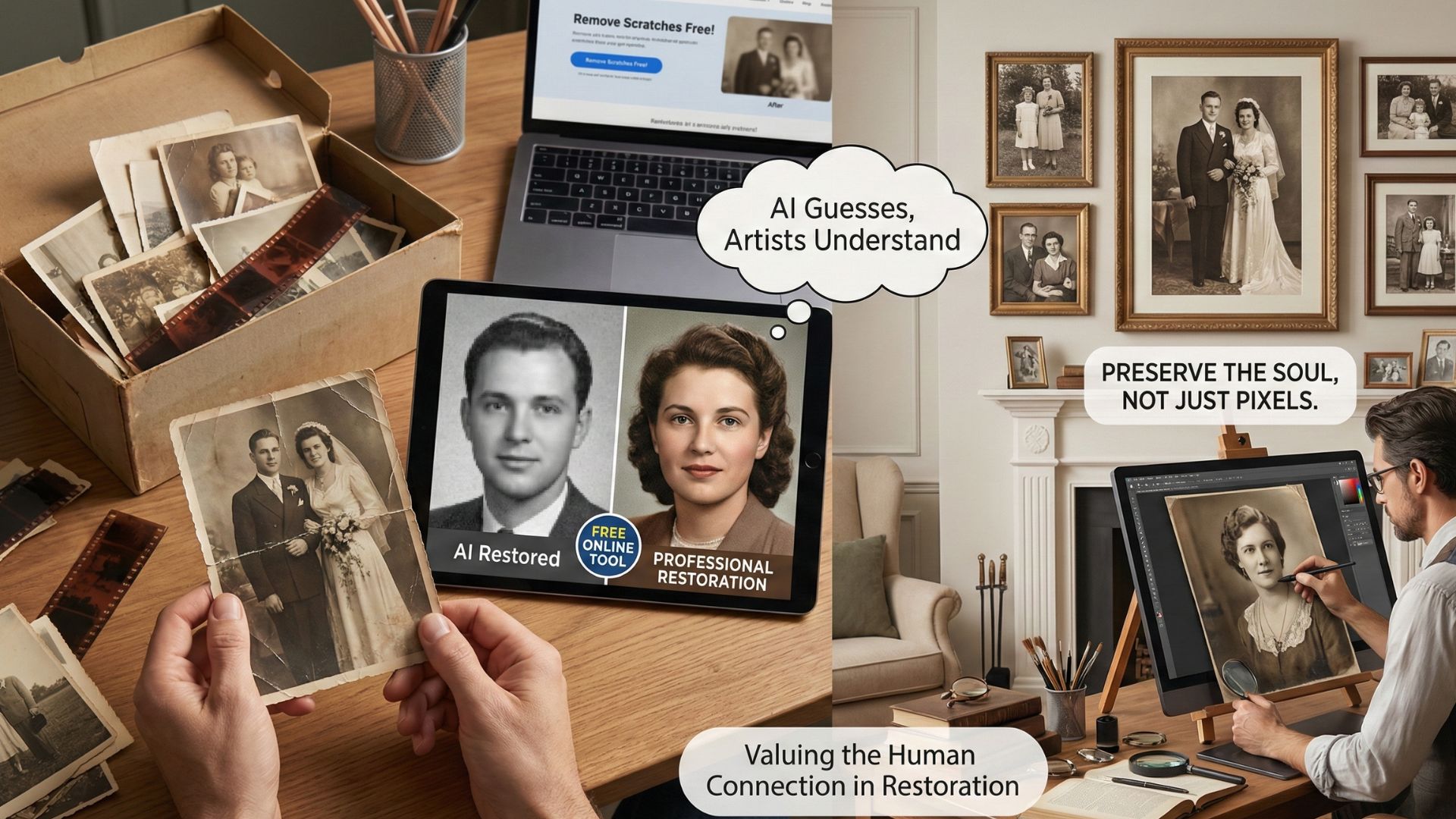
Modern tools can assist with restoration, but they have limits. AI systems are trained on general image patterns, not military specificity. They may misinterpret insignia. They may guess uniform colours incorrectly. They may sharpen details that should remain soft.
In sensitive contexts like military photo restoration, these errors matter. A misplaced colour or altered badge can feel unsettling to families who know the history. Professional restoration involves human judgment, cross-checking, and restraint that automated systems cannot yet replace.
Check Out Our Latest Article: Click Here
Presenting restored service photos in the home
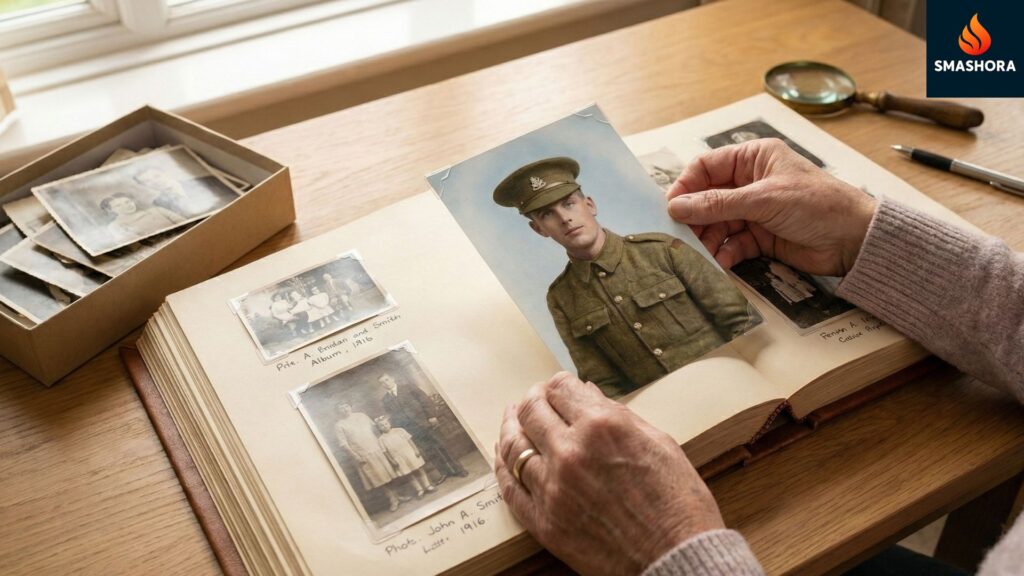
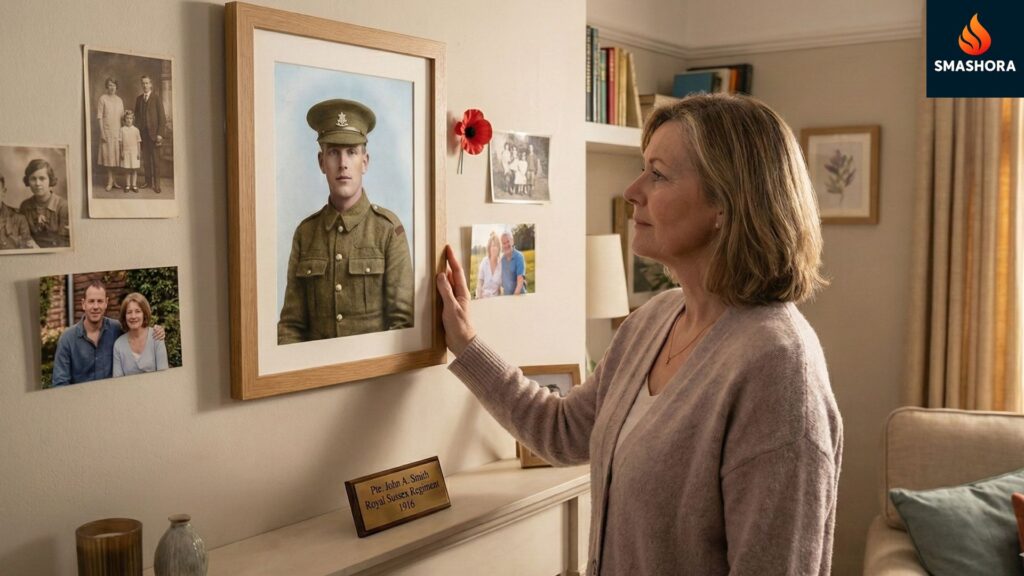
Once restored, many families choose to display these photographs during remembrance periods or year-round. Simple presentation works best. Neutral frames. Clean mats. No heavy embellishment.
Some include a small caption noting name, regiment, and service year. This grounds the image and honours the individual without turning the photograph into decoration. In both Australian and UK homes, these displays often sit quietly in studies or hallways, inviting reflection rather than attention.
Restoration as an act of remembrance
Restoring a military photograph is not about adding colour for effect. It is about preserving dignity. It allows families to see their ancestors clearly and truthfully, without damaging obscuring who they were.
Accuracy is a form of respect. When colours are correct and details are preserved, the photograph becomes a stronger link between generations. It reminds us that these were real people who lived, served, and were deeply loved.
Keeping service history clear for the future
As time passes, photographs become more fragile. Stories fade if they are not shared. Thoughtful restoration helps ensure that service history remains visible and understandable.
Whether it is an ANZAC portrait or a WW1 service photograph from the UK, caring for these images is a way of keeping memories alive. Respecting the uniform means respecting the person who wore it. That care matters now, and it will matter long after the next Remembrance Day has passed.