Fix Red Faded Photos: Old photographs from the Australian outback have a look of their own. Wide skies. Harsh light. Faces half-shaded by hats. Many of these images come from station life, where cameras followed families through workdays, gatherings, and quiet moments on the land. They are honest photographs, never polished, and deeply personal.
Over time, however, dust and sun take their toll. Heat fades colour unevenly. Reds and pinks begin to dominate. Skin tones shift. Skies lose their blue. For families exploring their Australian genealogy, these images matter. Restoring them is not about making them modern. It is about helping them feel balanced again.
Contents
- 1 Why do outback photos fade differently
- 2 Understanding red tone dominance in vintage Australian photos
- 3 Removing colour cast while keeping the outback feel
- 4 Why these photos matter for Australian genealogy
- 5 Repairing dust damage and surface wear
- 6 Bringing restored station photos into the home
- 7 Why cooling tones bring emotional clarity
- 8 Preserving rural memories for the future
Why do outback photos fade differently
Outback photo restoration presents challenges that are quite specific. Unlike studio portraits or city snapshots, these images were exposed to intense sunlight and heat from the moment they were taken. Many were stored in sheds, drawers, or boxes where temperatures fluctuated dramatically.
This environment accelerates colour breakdown. Reds become dominant. Blues and greens fade first. Whites turn warm and uneven. Understanding this process is key to fixing it. You cannot simply lower saturation. The colour shift must be corrected carefully, layer by layer.
Understanding red tone dominance in vintage Australian photos
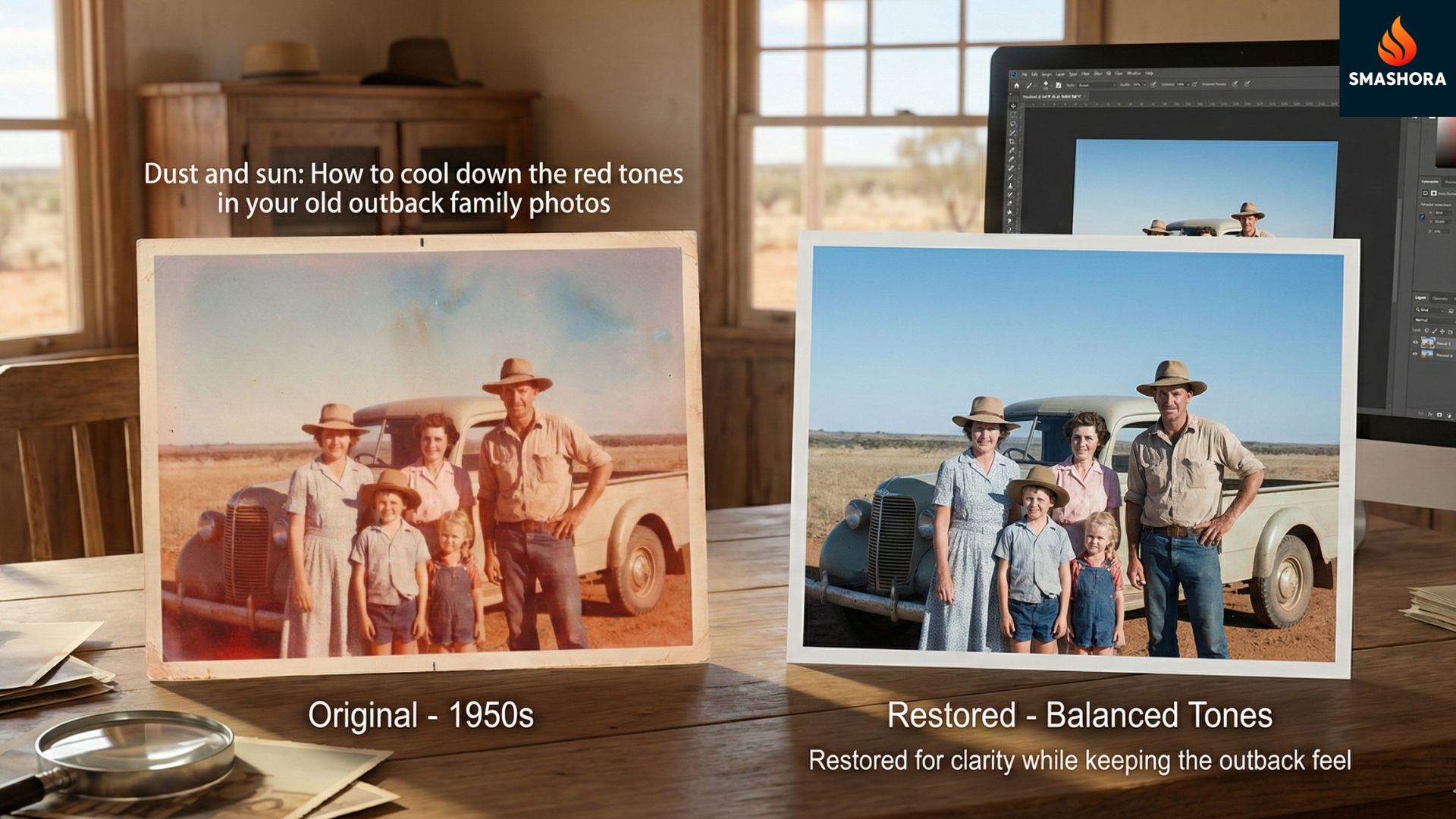
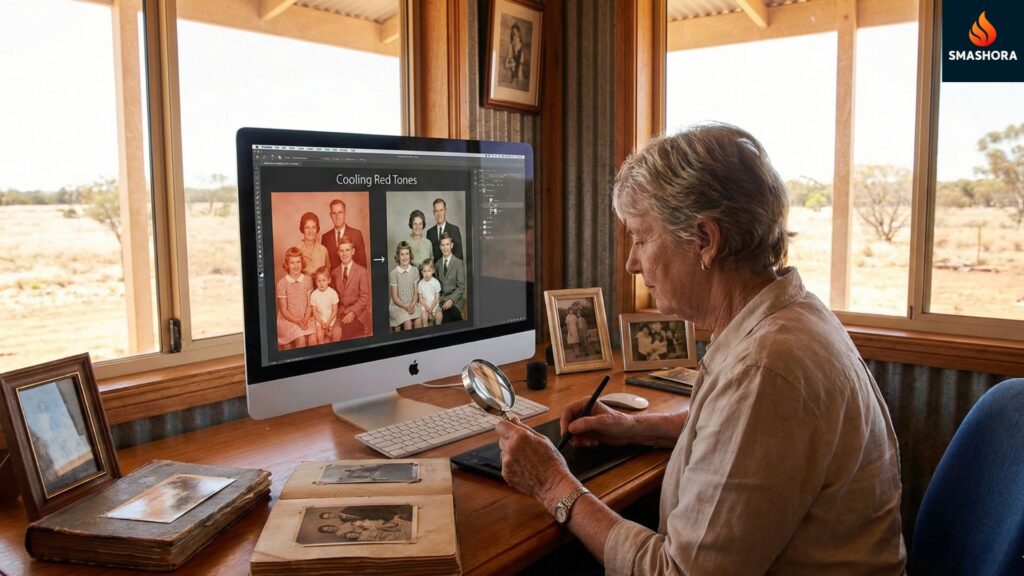
One of the most common requests is to fix red faded photos. The red cast often comes from sun damage combined with the original film stock used at the time. In rural areas, photos were often developed locally, sometimes under less controlled conditions.
When restoring these images, professionals look for neutral reference points. A shirt. A fence post. A patch of sky. These guide the correction process. The aim is to cool the overall tone without stripping the image of warmth that belongs to the landscape and time.
Removing colour cast while keeping the outback feel
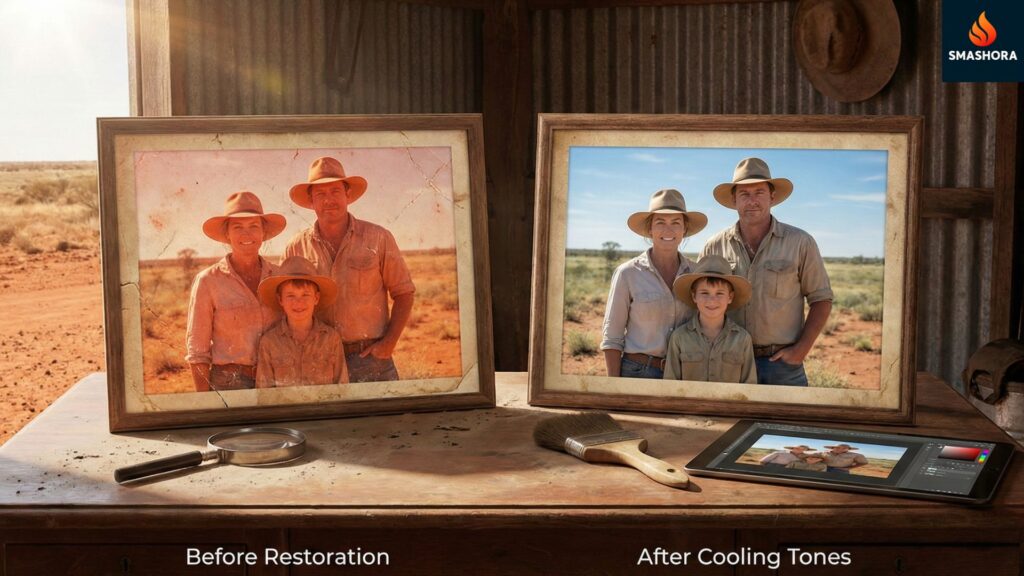
To remove colour cast from old photos successfully, restraint is essential. The outback has naturally warm tones. Soil, timber, and light all lean warm. Removing too much colour can make the photo feel unfamiliar.
Professional restoration balances warmth rather than eliminating it. Reds are softened. Skin tones are corrected gently. Shadows are cooled slightly. The image begins to breathe again. It feels closer to how the moment might have looked, rather than how the damaged print now appears.
Why these photos matter for Australian genealogy
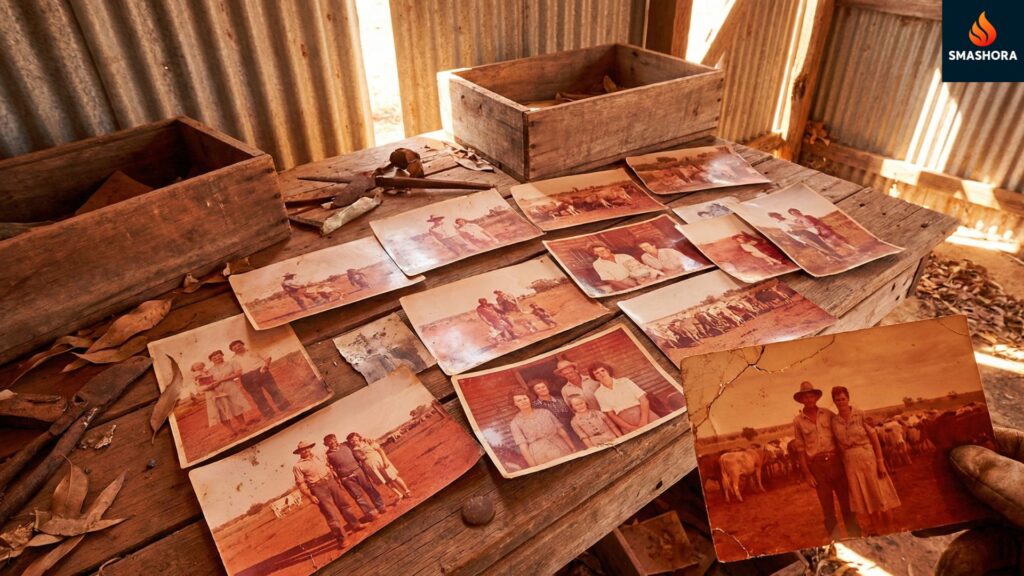
For many families, these photographs are key pieces of Australian genealogy. They show station hands, family gatherings, livestock work, and everyday life far from cities. Written records alone cannot capture this context.
Restored photos help younger generations connect visually with their heritage. They see faces clearly. They notice expressions and posture. They understand the physical reality of life on the land. This makes family history feel tangible rather than distant.
Repairing dust damage and surface wear
Red dust does more than shift colour. It scratches prints, embeds itself into paper texture, and causes uneven fading. Outback photo restoration often involves repairing surface damage alongside colour correction.
Professionals clean scans digitally, removing dust specks and scratches without flattening texture. Grain is preserved where it adds authenticity. The image remains honest to its origin, not overly smooth or artificial.
Check Out Our Latest Article: Click Here
Bringing restored station photos into the home
Once restored, these images often find a place in the home. Many families frame them in living rooms, hallways, or studies. Simple materials suit them best. Timber frames. Neutral mats. Soft lighting.
In homes that favour calm, natural interiors, a restored outback photo adds grounding. It connects modern life with rural roots. It does not dominate the space. It anchors it.
Why cooling tones bring emotional clarity
When red tones are corrected, faces become easier to read. Expressions return. The photograph feels calmer. This emotional clarity is often what families respond to most.
Fixing colour issues does not erase hardship or history. It allows the image to communicate more clearly. It lets the people in the photograph step forward again, rather than being hidden behind damage.
Preserving rural memories for the future
Dust and sun are part of Australia’s story. They shaped the land and the people who lived on it. Old photographs carry that mark, but they do not need to be lost to it.
Through thoughtful restoration, families can preserve these images with care and respect. Outback life, station work, and rural gatherings deserve to remain visible. Cooling down red tones is not about changing history. It is about giving it the clarity it deserves.